 Français (France)
  Finnish (FI)
  English (United Kingdom)




If project governance focuses too heavily either on strategic issues such as business benefits or either on operational effectiveness balance might be lost.
Traditional governance models tend to:
- emphasise reporting over reflection
- measure deviations more than impact, and
- reward compliance more than judgement.
As a result:
- a project can be “green” in status reports, yet
- weak in benefits, or
- deteriorating in stakeholder confidence.
Project Success Vector (figure 1) provides a simple, yet a powerful way of evaluating and measuring project success. It is composed of three core components (dimensions): stakeholder satisfaction, achievement of benefits, and planning accuracy.
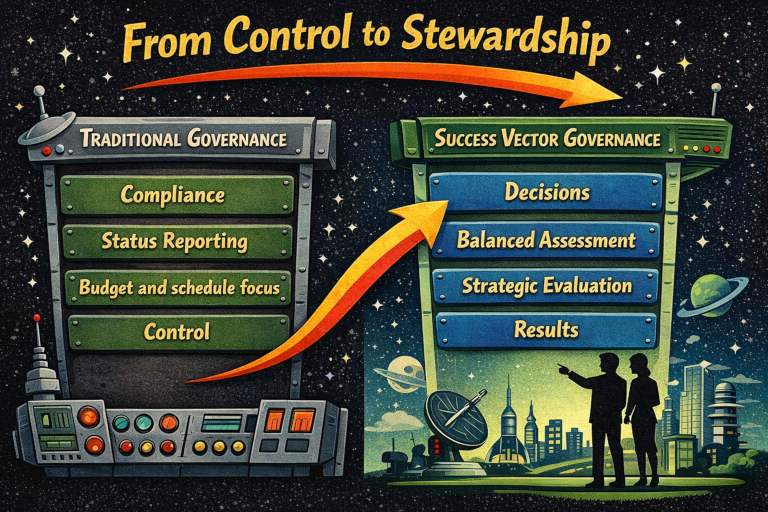
Figure 1. Governing through success vector.
Measuring success with Project Success Vector
Brief explanations of the components
- Stakeholder satisfaction, or legitimacy, which can be assessed using satisfaction surveys, customer loyalty, and reference value, such as NPS (Net Promoter Score®).
- Achievement of benefits, or strategic perspective. Measurement is done against the desired benefits from the project. It is worth noting that added value is only created when the benefits are greater than the investment, or effort (figure 2).
- Planning accuracy, or delivery performance (deviation from planned values). If you want to emphasize a particular perspective (schedule, costs, or scope), planning accuracy can be further divided into these sub-items with their own weights.

Figure 2. Value creation in PM competence development.
Two first ones are more strategic and the third one an operational component.
The length of the resultant vector (through Pythagora's theorem) would then reflect our project's success (figure 3). To express the resultant in terms of a fractional or percentage value (success index) we need to scale (normalize) each component relative to its maximum or target value.
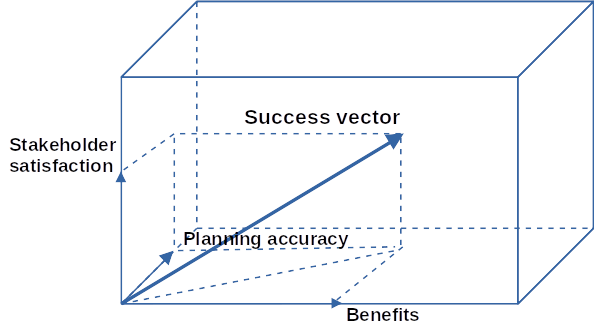
Figure 3. Project Success Vector.
The weights
Projects are different: scientific projects might emphasize achievement of results over strict planning accuracy, whereas in delivery projects planning accuracy is an important issue, so we need weights, which reflect the prioritization of components.
We can then think of project success as a weighted resultant vector. The specific formula is presented in 'Governing through success vector' article.
Tools and methods supporting the success vector
Templates: project charter, project plan, status report, final report
Registered users can access the necessary templates and checklists supporting project planning, monitoring and control in the free Project Manager's Guide.
Figure 4. Project Manager's Guide.
MonteCarloProject for project cost and schedule simulation
Figure 5. MonteCarloProject.
Developing PM competencies with Project Success Vector
When developing PM competencies there are factors related to the training itself, to the trainee and to the organisation (figure 1).
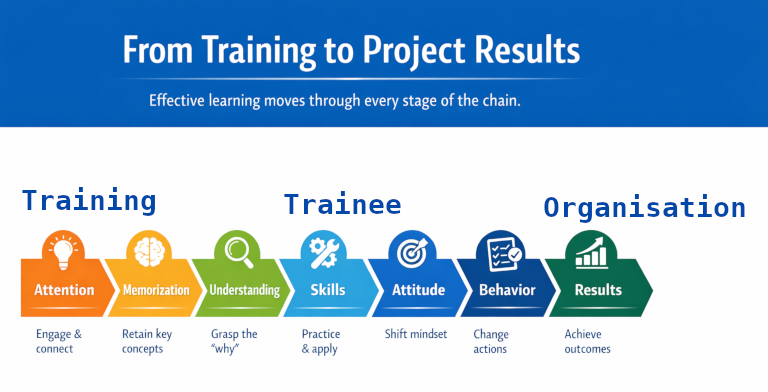
Figure 6. From training to results.
👉 Register: AI and tools supporting project success