 Français (France)
  Finnish (FI)
  English (United Kingdom)





As soon as a problem is identified in an organization, the familiar pattern begins: a project is created, a steering group is named, and a Teams channel is opened (figure 1). Soon, people are already making a plan – without stopping to ask: what is the real problem, and what would be the most reasonable way to solve it?
According to research (including Saara Karasvirta), large organizations can have hundreds of change projects running simultaneously – often without a clear overview, prioritization, or targeted resourcing.
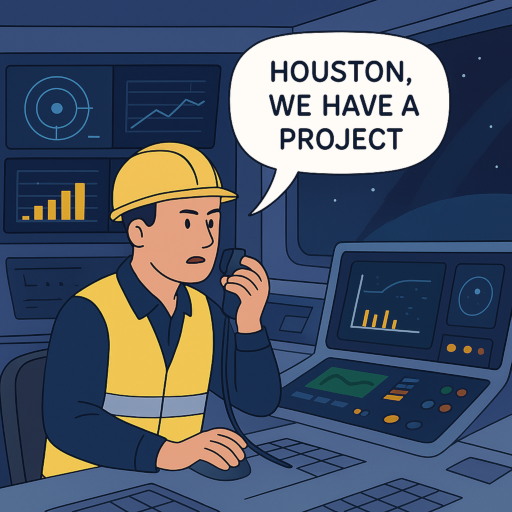
Figure 1. "Houston, we have a project."
🧭 The problem is not yet a project
Projects are a means, not a goal. It's tempting to jump straight to the solution, i.e. to a project. But before that, we should look at the entire value chain. The case of improving inadequate project management skills is illustrated in figure 2.

Figure 2. From problem to added value.
A conference related to the PM2 methodology is one solution to the identified problem, but there are also much simpler ones.
🔍 Three questions before you say “project”
- What is the real problem? Is it a symptom or a root cause?
- What benefit is being sought – and for whom? See the Project Success Vector.
- Is the project the best solution? Or could the problem be solved, for example, with:
- instruction,
- training,
- process change,
- prioritization, or
- better use of existing tools?
💡 The simpler, the better - often
Surprisingly often 60–80% of the desired benefits can be achieved with simple, non-heavy-duty, measures.
Yet organizations easily choose a “full-scale project” because:
- it gives the illusion of control,
- it sounds familiar, and above all
- it gives the impression of progress.
Even if you run for a project, I'd suggest to consider simple project methodologies.
🧩 Review the options
Before jumping to the dark side, ask following questions:
- What happens if we do nothing?
- What is the easiest possible working solution?
- What solution will produce fastest benefits?
- What kind of investment is inappropriate with respect to the desired benefits?
🛑 So don't panic
Good project management doesn't start with a project, but with the ability to:
- articulate the problem,
- identify the alternatives, and
- choose the most appropriate way forward.
Sometimes it leads to a project - surprisingly often it doesn't.
💬 When was the last time you asked yourself before the start: is this even a project?