 Français (France)
  Finnish (FI)
  English (United Kingdom)





I described authority bias in my earlier post. Let's see how it contributed to Titanic and Columbia shuttle accidents and how to deal with it.
Titanic's maiden voyage in 1912 had 1,324 passengers and 875 crew members. Of these, only 711 people survived. The Columbia shuttle accident in 2003 killed the entire crew of seven astronauts. In both accidents, the authority bias affected planning decisions and recovery actions in a fatal way.
Titanic
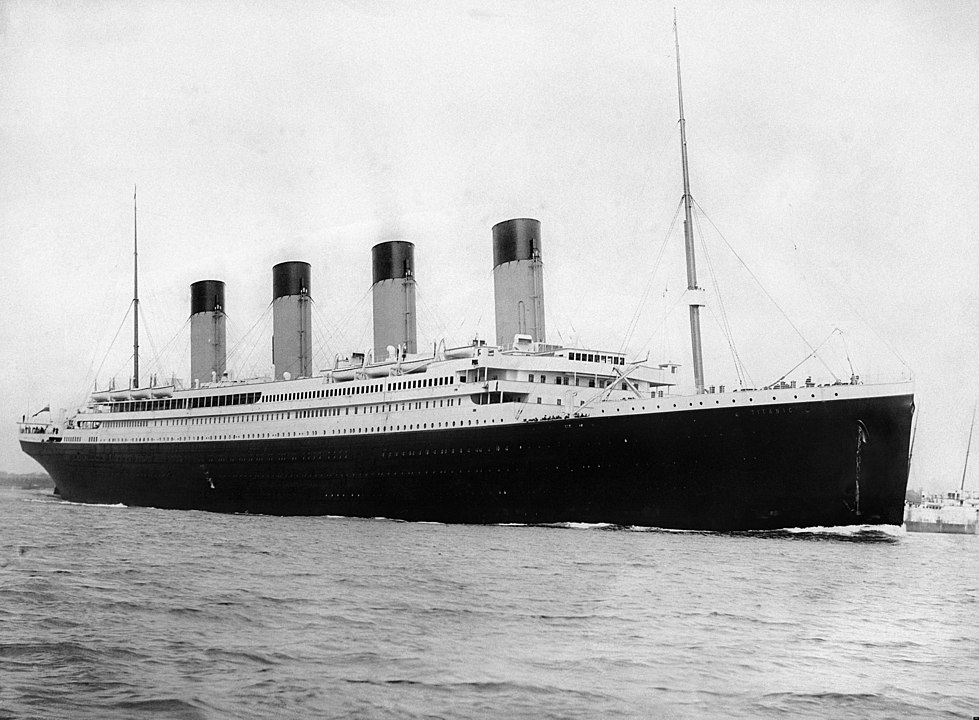
Kuva 1. By Francis Godolphin Osbourne Stuart - http://www.uwants.com/viewthread.php?tid=3817223&extra=page%3D1, Public Domain, https://commons.wikimedia.org/w/index.php?curid=2990792.
In the case of the Titanic, the authority bias undermined the 'safety first' culture embedded in the early design solutions. Project owner White Star Line's managing director and chairman Joseph Bruce Ismay reduced the number of lifeboats from the original 64 to 20, shortened three of the 15 bulkheads dividing the ship into 16 watertight compartments, and reduced the size of the double hull that improved the ship's safety. After the design changes, Titanic was still a very safe ship, but not unsinkable, which was a widely advertised feature. Due to this perception, some of the passengers returned to their cabins after the ship hit the iceberg.
The recovery actions were also poorly coordinated and even incorrect – such as restarting the ship. The lifeboats had also not been properly tested, so they were not used at full load. Based on the original plan, there would have been 44 more lifeboats. If we estimate that each of them would have carried 50 people, in theory (although probably not in practice) all the people on board could have been rescued, especially if sufficient rescue drills had been carried out.
Columbia

Kuva 2. By NASA - Great Images in NASA (image link), Public Domain, https://commons.wikimedia.org/w/index.php?curid=199486.
On February 1, 2003, the space shuttle Columbia was destroyed just seven minutes after re-entering the Earth's atmosphere. Video footage of Columbia's launch showed a piece of foam the size of a suitcase hitting the leading edge of the left wing 81.7 seconds after liftoff. The technical experts asked permission to take close-up pictures of the shuttle while it was in orbit so they could determine if the damage was serious. The project management was about to start their vacation and forgot the entire request and when the employees turned to NASA management, they were rebuffed outright.
In its final report, the committee stated that it considered the cause of the accident to be the disintegrated piece of insulation from the additional fuel tank. The piece then hit the leading edge of the left wing on takeoff. However, committee emphasized that accident was also caused by NASA's working culture, in which the detachment of pieces of insulation found on numerous previous flights and the damage they caused to the thermal protection tiles on the bottom of the shuttles had not been addressed with sufficient seriousness, and where other issues related to shuttle safety were ignored.
NASA's organizational structure and operating methods were found to be deficient to such an extent that security problems arise regardless of the persons in charge. The shuttle program manager was responsible for both on-time, safe launches and keeping costs under control, which are often conflicting goals. Deviations from the design criteria were accepted if they occurred on several flights and did not lead to serious consequences.
Solutions
The operating culture can be changed by emphasizing that the opinions of everyone involved in projects are equally important. Manager should seek ways to engage team members through anonymous working methods, examples of these are Delphi method, Nominal group technique and STEALTH debriefing.
As a general rule person acting as a project manager or having an authority position should withdraw him- or herself from giving estimates or opinions in face-to-face meetings or workshops, or at least express them cautiously, specially if project team members tend to follow manager’s opinions.
Further information
Articles in the Project management+ channel give a detailed description of accidents and their underlying factors.